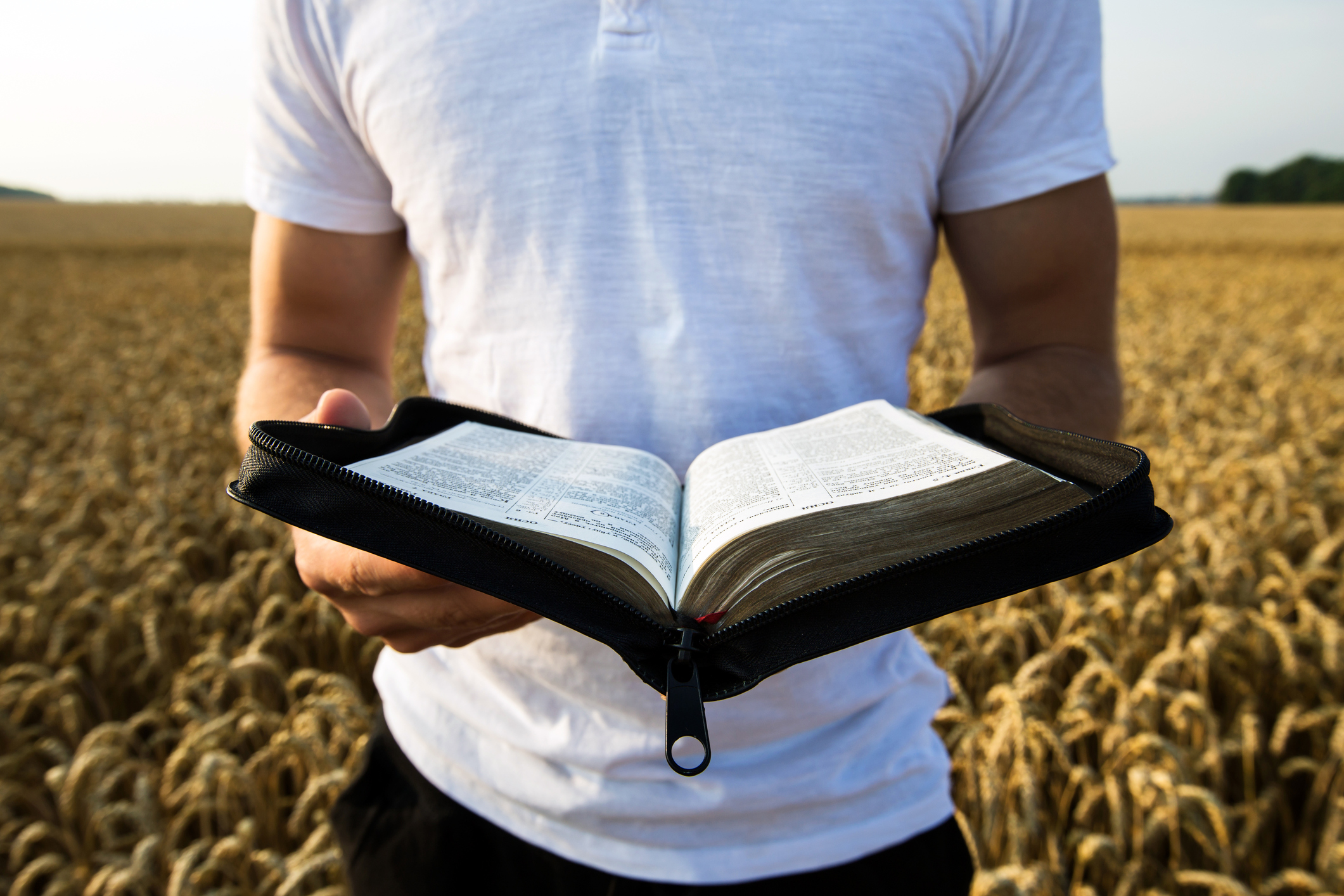
The vineyard belongs to God. You have been given a place in it.
You can tend your part. You can enjoy its fruit.
You can love that child through a decision you cannot make for them.
You can share what you have while tomorrow is still uncertain.
You can sit down at the table and discover that someone else has brought something, too.
You can receive this day and discover what love is possible in it.
You can go to sleep. And, while you sleep, somewhere in the dark, a seed will open.
Because beyond the reach of your hands, God is faithful.
You belong to something magnificent—and God is still at work—giving the growth, opening the future, tending to everything God loves.
Read More
“Someone going ahead of us does not close the road behind them. The way is still open. God’s call to us still stands.”
Read More
We have forgotten how to say, “I think you are wrong”—and leave it there.
We cannot simply disagree with another person’s conclusion. We have to explain what is defective in the person who reached it.
They must be ignorant.
They must be hateful.
They must have been brainwashed.
They must not care about the people or values I care about.
We stop being curious.
We don’t consider what that person may have lived through—or what they are afraid of—or what they are trying to protect.
Most of the people we dismiss are not threatening our lives.
They have simply contradicted us.
And somehow, disagreement has become distance.
Read More
We have become extraordinarily practiced at contempt.
It is different from disagreement. It is different even from anger.
Anger says, “What you did is wrong.”
Contempt makes a judgment about what you are.
It is the eye roll. The sneer.
The little laugh when somebody we dislike says something foolish.
It is the pleasure we feel when someone on the other side gets humiliated.
It is taking the worst example of a group of people and using that person to explain everybody in the group.
A player misses the shot, drops the pass, strikes out, or makes the mistake that costs the game.
Within minutes, strangers who have never met him are flooding his social-media accounts.
You're worthless. You should never play again.
Sometimes they go after the player's spouse or children.
Think about that.
A human being failed at something while millions of people were watching.
Something every one of us has done—failed.
And our response can be: Make him hurt. That is contempt.
Read More
We pray for guidance. Then become irritated by the guidance.
We ask: “Lord, where are you leading me?”
But what we really mean is:
“Here is where I would like to go. Could you please come with me?”
And most of the time, the road we have chosen isn't a bad road. The problem comes when the future we have imagined becomes the only future we are willing to follow Jesus into.
Because then, without quite realizing it, we've moved.
We've gotten out from behind Jesus.
And we're standing in front saying, “No. Not that way. This way.”
But faith has to leave room for the possibility that God can see farther down the road than we can.
Read More
“… we live in a culture that has elevated independence almost to the level of a virtue. We want to be financially independent. We want our children to become independent. Older adults fear losing their independence. We admire the self-made person. We don't want to be a burden.
And some of that is healthy.
But Paul says something startlingly different about the Christian life:
We belong to one another.
Read More
What about our friends and family members who have never followed Jesus? Or our children or siblings who grew up in the church but have now rejected the faith handed down to them?
What will become of people who have lost their faith—or who never had it?
Is God’s grace wide enough for them?
Paul reminds us that all people dwell in disobedience. All people. Including all of us.
We are not saved because we deserve it. We are saved because God is good.
God’s mercy is deeper than we can understand.
God’s faithfulness reaches farther than we can see.
“For the gifts and calling of God are irrevocable”—
and God’s promises… unbreakable.
Read More
Too often we assume that if we're doing exactly what God wants, things will become easier—and that if we encounter resistance, it’s a sign we’ve missed God’s will.
Matthew says the opposite.
The disciples are rowing into a headwind because they are obedient. They are doing what Jesus asked of them.
Whatever the headwind, Jesus has not abandoned us to it. He comes to us there.
Sometimes we can be doing the difficult thing faithfully for months or years—and then suddenly become overwhelmed by the sheer force of what we're up against.
The wind may be strong—but Jesus is stronger.
The forces that push against us may be strong—but Jesus is stronger.
The fear that overwhelms our Little Faith may be strong—but Jesus is stronger.
Read More
There is a story our world tells us every single day. We hear it so often we don't even notice it anymore. It says, "There isn't enough." Not enough money. Not enough jobs. Not enough housing. Not enough opportunity. Eventually that story moves inside us until we begin believing we aren't enough either. But Isaiah and Jesus tell a different story. When we've counted the loaves, done the math, and decided how the story ends, Jesus simply says, "Bring it here... to me."
Read More
The problem is that when we examine our own hearts—we find God's good seed and the bad seed growing together—both are present.
Every one of us knows what it is to love generously one day... and act selfishly the next.
The field isn't just out there. The field is in here. Inside our hearts.
Read More
Sooner or later, every one of us finds ourselves in an "off-ramp moment"—a place where hope has run dry and we begin to wonder whether God has forgotten us. Isaiah reminds us that God's Word is never empty. Like rain soaking into thirsty ground, it quietly brings life where we see only barrenness. Even in exile, even in suffering, even when we cannot yet imagine a way forward, God is already accomplishing the future he has promised.
Read More
The Bible has a name for this: sin. It is not simply the things we do wrong, but the power within us that twists what is good. Sin is the power that turns freedom into selfishness. Sin is the power that turns love into possession, justice into vengeance, and neighbors into enemies.
If the problem were ignorance, we'd need better education. If the problem were bad laws, we'd need better legislation. If the problem were lack of discipline, we'd need more willpower. But if sin has taken hold of the human heart, then we need more than advice—we need redemption.
Read More
“When Jesus wanted to change the world, he didn't gather an army. He called twelve ordinary disciples. That's the pattern. And so Jesus ends with a cup of cold water. It doesn't make the evening news. No one writes a history book about it. We didn't even see the person who delivered it. But Jesus did."
Read More
The gospel is not that every choice leads where we hoped. The gospel is that God's provision is larger than our choices.
Again and again, when the future appears to hang by a thread, God is already there. Abraham sees only one son or the other. God sees a future for both. Abraham sees scarcity. God sees abundance. Abraham sees an impossible choice. God sees a promise still unfolding.
And that future does not rest in our hands. It rests in God's hands.
Read More
"The disciples are not sent out to create the kingdom. They are sent out to join the kingdom that God is already bringing near. One pair of hands can only reach so far. But a thousand hands filled with the compassion of Christ can change a community."
Read More
Jesus is not sitting with sinners because our sins are harmless. He is sitting there because we need the mercy and healing of God. We can make promises. We can explain ourselves. We can hide it. We can dress it up. We can promise to do better. But we can no more fix ourselves than the bleeding woman could. There are places in our hearts that need more than improvement. They need the healing mercy of God in Christ Jesus—our Great Physician. Because Jesus does not come only for Matthew. Jesus comes for every place in us that is sick and tired and ashamed and afraid. He comes for the part of us that has done wrong. He comes for the part of us that has been wronged. He comes for the part of us that wants mercy. He comes for the part of us that refuses mercy. He comes and sits at the table beside us. And that changes everything.”
Read More
“The Spirit takes people who think they have nothing to say and gives them a word. The Spirit takes people who have been silenced by fear, by pain, by shame, by grief, by disappointment, and gives them a voice.”
Read More
“When pressure rises… when uncertainty grows… when the future feels dangerous or unclear… every instinct in us screams: react. Move. Do something. There are moments when the hardest thing in the world is not action—but restraint. Not because nothing needs to be done—but because moving too quickly can make things worse.
Before the church speaks, it listens. Before it acts, it gathers. Before it moves, it waits. And waiting is hard when we’re feeling anxious… but waiting—and praying—is not inactivity. It is training. It is humility… and disciplined restraint.”
Read More
“In a world that moves quickly… discards quickly… forgets quickly… leaves quickly… the followers of Jesus remain. We stay. We sit beside hospital beds. We keep showing up with casseroles. We keep making phone calls. We mentor other people’s children. We forgive one another. We show up at funerals because nobody should grieve alone. We pray when words come hard. We keep loving even after disappointment. Because Christ has abided with us.”
Read More
Every day, voices around us tell us what deserves our fear… our focus… our devotion.
We live in a world filled with noise—
constantly demanding our attention and telling us where to look every hour of the day.
Look at what you lack.
Look at who is winning.
Look at who is failing.
Look at who to fear.
Look at who to blame.
But what we keep looking at… has the power to shape us.
If we spend our lives staring only at anger… we become angry.
If we stare only at fear… fear begins to rule us.
If we stare only at what is broken… despair slowly settles into the bones.
But we have the power to look up—
to see the heavens opened—
and Jesus standing before us…
claiming us…
strengthening us…
so that fear and violence don’t get the last word.
Read More